
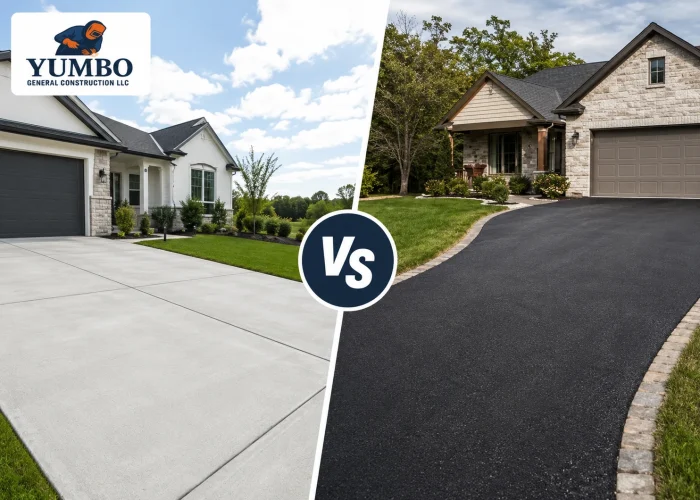
The decision to install a concrete or asphalt driveway is one of the most important ones among homeowners, particularly in Florida, where the high temperatures, humidity, and precipitation may affect the performance of the driveway. Being aware of the materials will allow you to choose the most suitable one based on how long it lasts, looks, maintains, and holds its value. When planning exterior driveway improvements and enhancing curb appeal, numerous homeowners often inquire about concrete vs asphalt driveways in Florida. Yumbo General Construction LLC provides affordable solutions to your driveway problems
Understanding the Difference Between Concrete vs Asphalt Driveways in Florida
Both asphalt and concrete are hard and have a great lifespan as residential driveways; the two are made with different materials and have disparate lifespans.
Cement, water, sand, and aggregates can create concrete, and they contribute to forming a very tough, rock-like surface. Asphalt consists of aggregates that are cemented by bitumen to make the surface more flexible. Each of these materials possesses its benefits, and they will fit into your budget, maintenance, and the climate in the region.
Why Climate Matters in Florida
Climate is one of the factors that should be considered when comparing CA concrete vs. asphalt driveways in Florida.
Florida is sunny, hot, and wet, and has heavy rainfall and sometimes tropical storms. With high temperatures, concrete will be applicable, as it does not become soft in hot weather conditions. Asphalt, in contrast, could be softened in extended high temperatures and can display an easy way to wear in hot places.
Heat resistance is a crucial benefit of concrete driveways among most Florida homeowners.
Initial Installation Costs
Decreased initial price is one of the largest factors that homeowners opt for asphalt. Compared to concrete driveways, asphalt driveways are generally cheaper to install and thus are appealing to cash-strapped projects.
Concrete is expensive to start up due to the two-fold material and labor expenses involved. Nevertheless, the cost of installation is not the only factor one needs to put into consideration when comparing the long-term value.
Asphalt can end up being cost-effective in the short run, but later on, the costs of upkeep can also impact the overall cost incurred in ownership.
Durability and Lifespan
Concrete can often have a major edge in the area of durability.
When a concrete driveway is installed and taken care of, most driveways can be used for 30 or 40 years or more. Asphalt driveways typically have a life of 15 to 25 years and are likely to need greater maintenance during their existence.
When considering long-term construction, concrete could offer a better long-term value compared to the increased initial price of the material, even in a home that may last many years.
Maintenance Requirements
Another key consideration of comparing and contrasting the driveway materials is maintenance.
Concrete needs to be periodically sealed and occasionally cleaned, but it requires less maintenance. The asphalt normally needs to be resealed every few years in order to prevent all the weather, UV radiation, and the remnants of the surface. Consistently filling the cracks as well as repairs might also be required as the driveway wears out.
Concrete is a more convenient option for homeowners who are willing to be involved with lower maintenance.
Appearance and Curb Appeal
A driveway will help enhance the overall look of a home.
The concrete can provide greater flexibility to the design in the form of decorative finishing, stamping decorations, color, and texture. It may be designed to suit different architectural designs and landscapes. Asphalt offers a classic black, which is present yet includes fewer customizations.
Provided that it is necessary to increase the level of curb appeal, concrete has more aesthetic options available.
Repair Considerations
Immovable, any driveway will at one time or another need some type of repair.
Asphalt can be said to be at an advantage regarding repairs since cracks and patches can easily be regarded as part of the surrounding surface. The use of concrete repairs may be more pronounced and occasionally may demand some specialized work. Nevertheless, concrete is not commonly repaired as frequently since it has a longer life.
Whether to make the decision based on more effortless repairs or on the number of repairs will generally determine the right decision.
Which Option Provides Better Long-Term Value?
Asphalt has lower installation costs, but its concrete can sometimes provide better long-term costs due to durability, decreased maintenance, and extended services provided.
In comparison with a lot of industries, concrete is more expensive in the short term; however, its durability is capable of paying back the high cost in the long term. Concrete has also been proven to be resistant to heat and UV radiation, creating additional value and adding to its value proposition in warm climates such as Florida.
Concrete can also be a better choice when it comes to long-term investment for homeowners.
The Best Choice for Florida Homeowners
An evergreen solution does not exist that suits all properties. Homeowners who have limited finances can have asphalt due to its cheaper cost of installation. Concrete is preferred by people who want to have maximum durability, decreased maintenance, and more flexibility in design.
Since Florida has distinct needs for concrete in terms of climate conditions, it is proposed by numerous contractors that concrete is the best solution for driveways in houses, as it can sustain extended heat in Florida and retain its appearance over time.
Final Thoughts
Comparing the concrete vs. asphalt driveway Florida options, the choice of the best material lies in your budget, expectations of maintenance, and long-term objectives. Compared to concrete, asphalt is cheap and easy to repair; concrete is very strong and needs fewer repairs and is more resistant to the hot climate in Florida.
With the help of Yumbo General Construction LLC, homeowners can estimate their needs, choose materials, and find a solution to the driveway that will not only enhance its functionality but also make it more beautiful with time.
FAQs
1. Is concrete better than asphalt in Florida?
In many cases, yes. Concrete is more apt to withstand the heat of Florida, and it has a long life.
2. What is the less expensive driveway to install?
Installation of asphalt is often cheaper in the initial cost compared to concrete.
3. How many feet long is the driveway?
The lifespan of concrete is normally more than 30-40 years, and the lifespan of asphalt is normally more than 15-25 years.
4. Does asphalt need increased maintenance?
Yes. Asphalt normally requires sealing and repair more frequently.
5. Which driveway would have better curb appeal?
Concrete usually has higher decorative and customization possibilities for its homeowners.