
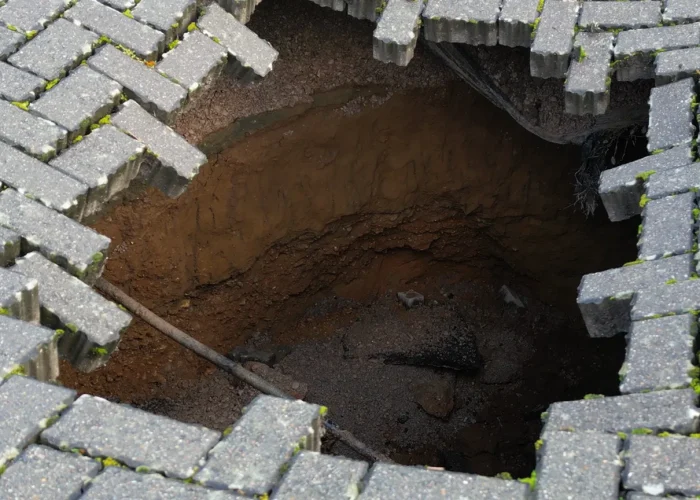
Sinkholes can be a serious concern for homeowners and property owners. They can develop slowly over time or appear suddenly, creating holes or depressions in the ground. In some cases, a sinkhole may only cause minor landscape damage, while larger sinkholes can affect driveways, foundations, patios, roads, and other structures.
Understanding what causes sinkholes, how to identify warning signs, and when to seek professional help can help protect your property from costly damage.
What Is a Sinkhole?
A sinkhole is a depression or hole that forms when the ground surface collapses into an underground cavity. Sinkholes are commonly associated with areas where the underlying rock can dissolve when exposed to water.
As groundwater moves through certain types of rock, such as limestone, it can gradually create underground spaces. Soil and sediment above the cavity may eventually lose support. When this happens, the ground can sink or collapse, resulting in a sinkhole.
Not every ground depression is a sinkhole. However, unexplained changes in the ground should be taken seriously, particularly when they continue to grow.
What Causes Sinkholes?
Several natural and human-related factors can contribute to sinkhole formation.
1. Groundwater Movement
Water is one of the most important factors in sinkhole development. Continuous groundwater movement can dissolve susceptible rock beneath the surface and create underground voids.
Changes in groundwater levels can also contribute to instability. Heavy rainfall, drought, flooding, or changes in drainage patterns may increase the risk in vulnerable areas.
2. Heavy Rainfall
Periods of heavy rain can saturate the soil and increase water movement below the surface. If underground cavities already exist, additional water may weaken the surrounding soil and contribute to ground collapse.
3. Drought Conditions
Extended dry periods can lower groundwater levels and cause changes in soil conditions. In certain environments, these changes may contribute to instability and increase the possibility of ground settlement.
4. Construction and Excavation
Human activities can sometimes contribute to ground instability. Excavation, improper drainage, leaking underground pipes, and construction activities may change how water moves through the soil.
Poorly compacted fill dirt can also settle over time, creating depressions that may resemble or contribute to sinkhole-like problems.
Warning Signs of a Sinkhole
Recognizing early warning signs can help you address a potential problem before it becomes more severe. Some signs to watch for include:
- New depressions or holes developing in the yard
- Cracks appearing in the ground
- Cracks in driveways, sidewalks, patios, or concrete surfaces
- Doors or windows suddenly becoming difficult to open
- Uneven floors or noticeable changes around the foundation
- Trees, fences, or other structures beginning to lean
- Water collecting in an unusual area
- Previously level surfaces becoming uneven
- Cracks developing in walls or ceilings
These signs do not always mean a sinkhole is present. Ground settlement, drainage problems, erosion, and foundation movement can produce similar symptoms. A professional evaluation can help determine the actual cause.
Why Sinkholes Can Be Dangerous
A small depression may appear harmless, but underground conditions can be difficult to see from the surface. If an underground void continues to grow, the affected area may become unstable.
Sinkholes can damage landscaping, concrete surfaces, underground utilities, foundations, and other structures. A rapidly expanding hole can also create safety hazards for people, vehicles, and pets.
For this reason, homeowners should avoid walking or driving over an area that appears unstable or has recently collapsed.
What Should You Do If You Notice a Sinkhole?
If you discover a potential sinkhole, the first step is to keep people and vehicles away from the affected area. Do not attempt to fill a large or actively developing hole without determining what caused it.
Take photographs of the area and monitor whether the depression is getting larger. Look for nearby cracks, drainage changes, or other signs of movement.
The next step is to contact a qualified professional who can evaluate the property. Depending on the situation, the inspection may involve examining the surrounding soil, drainage, surface conditions, and possible underground voids.
Sinkhole Repair and Stabilization
The appropriate repair method depends on the size, depth, location, and underlying cause of the sinkhole.
Some smaller areas may require controlled filling and compaction. More serious cases may require specialized stabilization techniques designed to strengthen the ground and provide additional support.
Professional sinkhole repair should focus on more than simply filling the visible hole. The underlying cause needs to be addressed to reduce the risk of continued settlement or future problems.
Protect Your Property From Sinkhole Damage
Regular property inspections can help identify ground movement before it becomes a major problem. Keep an eye on your yard, driveway, foundation, and other hard surfaces for new cracks or depressions.
Proper drainage is also important. Water should be directed away from foundations and should not be allowed to collect around areas with existing ground instability.
If you notice unusual ground movement or a developing depression, don’t ignore it. Early professional assessment can help determine whether you are dealing with a sinkhole, erosion, soil settlement, or another issue.
Final Thoughts
Sinkholes can develop because of natural geological conditions, groundwater movement, weather changes, or human activities. While some signs may be subtle, cracks, depressions, uneven surfaces, and unexplained ground movement should always receive attention.
If you suspect a sinkhole on your property, prioritize safety and seek a professional evaluation. Identifying the problem early can make it easier to determine the right repair approach and help protect your home, property, and investment.